Showing posts with label NEWS. Show all posts

Monday, 29 August 2022

China pledges support to Sri Lanka at UNHRC Session

“China has always been supporting Sri Lanka in the international fora for protecting its sovereignty, independence, and territorial integrity. We will continue to do that. In contrast, some countries, far or near, always make various groundless excuses to bully Sri Lanka and trample on Sri Lanka’s sovereignty and independence repeatedly,” Ambassador Qi Zhenhong said in an article 

Sri Lanka has requested China to bridge the loan to handle the country’s enduring crisis. China has already announced a $74 million grant in May, but it is yet to respond to Colombo’s appeal for an immediate request to grant $4 billion.

Considering the severe Humanitarian and Economic crisis in Sri Lanka, the upcoming 51st United Nations Human Rights Session in Geneva, Mr Qi that the Human Rights issues in Sri Lanka might stir up again.

In March 2021, the Human Rights Council adopted a resolution titled ‘‘Promoting reconciliation, accountability and human rights in Sri Lanka’. Out of 47 members, 22 voted for the resolution while India abstained.

United Nations Human Rights Council session in Geneva is to hold a meeting in the week ahead to discuss the Sri Lankan crisis and pass a resolution regarding that. China has a firm belief in supporting the resolution and Sri Lanka at the international forum and the best way possible.

Thursday, 25 August 2022

Organic farming: A gamechanger for agriculture in India?

 Why In News These Days:

 “Organic farming is our duty,” Prime Minister Narendra Modi said, while addressing the nation on the 75th Independence Day on August 15.

Modi mentioned organic and natural farming twice in his speech, as he talked about turning to chemical-free agriculture.

“Today natural farming is also a way of becoming self-reliant,” he said. “Today the factories of nano fertilisers have brought new hope to the country. But natural farming and chemical-free farming can give a boost to self-reliance.”

While switching to organic farming could counter dangers to the environment—such as soil degradation due to increased fertiliser use—and public health, scientists are still divided on whether India can afford the transition to chemical-free agriculture. That’s because organic farming means less intensive agriculture, and in turn, decreased crop productivity. This could put India on the backfoot with regard to food security; altered rainfall patterns caused by climate change are already causing huge losses to farmers, scientists said.

Benefits of organic farming

Today, India has a surplus of foodgrains. This self-sufficiency came thanks to the Green Revolution in the 1960s, which increased crop production—of mostly rice and wheat—substantially. Foodgrain production rose from 82 million tonnes (MT) in the late 1960s to 264 MT in 2013-14.

But along with the increasing area under farming and switching to high-yielding varieties of rice and wheat, farmers were also encouraged to use chemicals—fertilisers and pesticides—to facilitate higher yields.

This caused “unintended but harmful consequences on agriculture and human health”, according to scientists Daisy John and Giridhar Babu of the Public Health Foundation of India, Bengaluru. The impacts were many and still persist, they wrote. The use of pesticides and fertilisers led to an increase in heavy metals (such as cadmium, lead and arsenic) in the soil. In many areas, soils turned more alkaline; beneficial microbes died, and soils became infertile. Farmers in some major Green Revolution belts including Punjab also burn crop residue, which is a major cause of air pollution in northern India.

A recent report by the non-profit Pesticide Action Network India found that there is widespread, unauthorised and unsafe use of four pesticides (chlorpyrifos, fipronil, atrazine, and paraquat dichloride) in India. Of these, three are listed as “moderately hazardous” by the World Health Organisation based on their health impacts.

What is Organic Farming?

The USDA defines organic agriculture as "a production system that is managed to respond to site-specific conditions by integrating cultural, biological, and mechanical practices that foster cycling of resources, promote ecological balance, and conserve biodiversity."

More specifically, organic farming entails:

  • Use of cover crops, green manures, animal manures and crop rotations to fertilize the soil, maximize biological activity and maintain long-term soil health.
  • Use of biological control, crop rotations and other techniques to manage weeds, insects and diseases.
  • An emphasis on biodiversity of the agricultural system and the surrounding environment.
  • Using rotational grazing and mixed forage pastures for livestock operations and alternative health care for animal wellbeing.
  • Reduction of external and off-farm inputs and elimination of synthetic pesticides and fertilizers and other materials, such as hormones and antibiotics.
  • A focus on renewable resources, soil and water conservation, and management practices that restore, maintain and enhance ecological balance.

When deciding if organic farming might be right for you, consider the list of characteristics shared by successful organic farmers:

  • A commitment to a safer food supply and protection of the environment
  • Patience and good observation skills
  • An understanding of ecological systems
  • Good marketing skills and motivation to spend time seeking out markets
  • A willingness to share stories of successes and failures and to learn from others (information networks are often underdeveloped for organic farmers).
  • Flexibility and eagerness to experiment with new techniques and practices

Types of Organic Farming

Organic farming is divided into two types, namely:

  1. Integrated organic farming
  2. Pure organic farming

Pure organic farming means avoiding all unnatural chemicals. In this process of farming, all the fertilisers and pesticides are obtained from natural sources such as bone meal or blood meal.

Integrated organic farming includes the integration of pest management and nutrients management to achieve ecological requirements and demands.


Benefits of organic farming

  •  Environment-friendly.
  • Promotes sustainable development.
  • Healthy and tasty food.
  • Inexpensive process.
  • It uses organic inputs.
  • Generates income.
  • Generates income through exports.
  • Source of employment.
  • Organic farming is more labour intensive. Hence, it generates more employment.

Disadvantages of Organic Farming

Incompetent: The major issue of organic farming is the lack of inadequate infrastructure and marketing of the product.

Less production: The products obtained through organic farming are less in the initial years as compared to that in chemical products. So, farmers find it difficult to accommodate large-scale production.

Shorter shelf life: Organic products have more flaws and a shorter shelf life than that of chemical products.

Limited production: Off-season crops are limited and have fewer options in organic farming.


Thursday, 17 February 2022

India is all set to Lunch It's Green Energy Policy? Why in New? Know All about it.

 The government is to announce the first part of the National Green Hydrogen policy on February 17, power minister Raj Kumar Singh has said, a move aimed at making India energy-independent and also meeting its climate commitments.

The government would allow free power transmission to renewable energy units set up by green-hydrogen producers and power banking facility for 30 days, Singh has said.

The second phase, which would require the approval of the Union Cabinet, would follow soon.

Prime Minister Narendra Modi announced the National Hydrogen Mission on Independence Day in 2021, with the ambition to boost the growth of green hydrogen in India to work towards being energy independent.

Green hydrogen refers to the hydrogen generated from electrolysis of water, with the entire process run on renewable energy. Green hydrogen has the potential to be the enabler of transition to sustainable energy.

In the industry, the colour is assigned based on the source of electricity that is used to generate the hydrogen molecule. Brown hydrogen is for coal, grey for natural gas and blue if it is produced from natural gas with a process of steam methane reforming.

As climate change and global warming concerns mount and countries across the world commit to reducing emissions, green hydrogen has triggered a lot of interest given its ability to generate large-scale energy with a low carbon footprint.

With recent advances in technology, drop in prices, growing competition and government incentives, experts believe the green energy sector will take off over the next few years.

Several private sector companies have already made commitments towards working on green hydrogen production. Here’s a look at who is planning what:

Reliance Industries Ltd (RIL)

RIL chairman Mukesh Ambani has announced a plan to invest Rs 75,000 crore over the next three years to build a new clean-energy business aimed at meeting the conglomerate’s commitment to be net carbon neutral by 2035.

The plan entails three parts—a Rs 60,000-crore investment in four giga factories that will manufacture and fully integrate all the critical components for the business; a Rs 15,000-crore investment in building the value chain, partnerships and future technologies, including upstream and downstream industries and repurposing the company’s engineering, project management and construction capabilities toward clean energy.

Green hydrogen would be a priority, as Ambani said the group aims to offer hydrogen energy at under $1 a kg in a decade.

In October 2021, RIL arm Reliance New Energy Solar Limited (RNESL) signed a memorandum of understanding with Danish company Stiesdal A/S to partner and cooperate on the completion, development, and subsequent manufacturing of hydrogen electrolysers being developed by the latter in India.

RIL also aims to be one of the largest producers of blue hydrogen globally by using petroleum coke.

GAIL (India) Ltd

The state-run company is geared up to build India’s largest green-hydrogen facility over the next 12-14 months.

It aims to supplement its natural gas business with carbon-free fuel, as investors increase focus on environmental, social, and governance (ESG) parameters.

Last year, GAIL chairman and managing director Manoj Jain said the company launched a global tender to procure electrolyser that could produce 4.5 ton a day of hydrogen.

The company recently started a first-of-its-kind project of mixing hydrogen in the natural gas system at Indore, on pilot basis.

Indian Oil Corporation Ltd (IOC)

The company plans to build the country’s first green- hydrogen plant at its Mathura refinery.

The oil-marketing company has also has in-principle approval for an investment of Rs 100 crore for setting up green-hydrogen fuel infrastructure at Kochi and Thiruvanantuapuram as a pilot.

NTPC Ltd

The state-run power utility bagged the country’s first green hydrogen microgrid project at its Simhadri plant in Andhra Pradesh.

In July 2021, its arm NTPC Renewable Energy Ltd called a domestic tender to set up India’s first green hydrogen fuelling station in Leh, Ladakh.

The company plans to use the electricity generated from its upcoming renewable energy projects to generate green hydrogen on commercial scale.

Larsen & Toubro Ltd

The engineering major is keen to enter the green- hydrogen space and has already tied up with companies working on the technology.

L&T signed a pact with Norway-based electrolyser technology and manufacturer HydrogenPro AS to set up a unit in India.

As per the memorandum of understanding, L&T and HydrogenPro will work towards setting up of a gigawatt-scale manufacturing unit for alkaline water electrolysers  based on HydrogenPro technology.

In December, L&T tied up with Nasdaq-listed ReNew Power to jointly develop, own, execute and operate green hydrogen projects in India.

Adani Group

Billionaire Gautam Adani has said that the Adani Group hopes to become one of the largest green-hydrogen producers in the world, which could subsequently help India emerge as world’s cheapest hydrogen producer.

The group is investing $20 billion in renewable energy generation over the next decade and is keen to use for producing green hydrogen.

Bharat Petroleum Corporation Ltd (BPCL) 

The company has collaborated with Bhabha Atomic Research Centre (BARC) to work on alkaline electrolyser technology for Green Hydrogen production.

The company aims to scale up production of the electrolyser for commercial use, especially in refineries.

Many other companies, such as ReNew Power, ACME Group and JSW Group, are working towards entering the green-hydrogen ecosystem.

Wednesday, 16 February 2022

Anti-mob lynching bills: why in news? recent incidents of mob lynching

 Bills passed against mob lynching in the past four years by at least four States have not been implemented with the Union government taking a view that lynching is not defined as a crime under the Indian Penal Code (IPC).

  • These states include Jharkhand, Rajasthan, West Bengal and Manipur.

Why have the bills been delayed so much?

In 2019, the MHA informed the Lok Sabha that it had received the bills passed by the State legislatures that have been reserved by the Governor for consideration of the President.

  • The President has to go with the advice given by the Council of Ministers, in the case of such legislation, represented by the MHA.
  • The Ministry examines the State legislations on three grounds— repugnancy with Central laws, deviation from national or central policy and legal and constitutional validity. 

Recent incidents of mob lynching in India

  • In December 2021, a man was lynched to death by the Sikh Sangat (Sikh devotees) in Shri Harmandir Sahib Gurudwara (Golden Temple) in Amritsar over an alleged attempt to disrespect the holiest book of Sikh religion, Shri Guru Granth Sahib Ji.
  • In 2021 in Assam, a 23-year-old student leader was allegedly killed by a mob.
  • In 2021 October a man was allegedly lynched, his limbs cut off and left to die at the Singhu Border, site of the farmers’ protest against the three farm laws.
  • In 2021 August, a bangle seller in Indore was reportedly beaten up by a mob for allegedly hiding his identity.
  • The man survived and was sent to judicial custody.
  • In 2021 May, a 25-year-old Gurugram man was allegedly lynched when he went out to buy medicines. 

What is meant by Lynching? Why in news ?

Any act or series of acts of violence or aiding, abetting (encouraging) such act/acts thereof, whether spontaneous or planned, by a mob on the grounds of religion, race, caste, sex, place of birth, language, dietary practices, sexual orientation, political affiliation, ethnicity or any other related grounds. 

How are these cases handled?

There is “no separate” definition for such incidents under the existing IPC. Lynching incidents can be dealt with under Section 300 and 302 of IPC.

  • Section 302 provides that whoever commits murder shall be punished with death or imprisonment for life and shall also be liable to fine. Offence of murder is a cognisable, non- bailable and non-compoundable offence.

SC guidelines about mob lynching

  • There should be a “separate offence” for lynching and the trial courts must ordinarily award maximum sentence upon conviction of the accused person to set a stern example in cases of mob violence.
  • The state governments will have to designate a senior police officer in each district for taking measures to prevent incidents of mob violence and lynching.
  • The state governments need to identify districts, sub-divisions and villageswhere instances of lynching and mob violence have been reported in the recent past.
  • The nodal officers shall bring to the notice of the DGP about any inter-district co-ordination issues for devising a strategy to tackle lynching and mob violence related issues.
  • Every police officer shall ensure to disperse the mob that has a tendency to cause violence in the disguise of vigilantism or otherwise.
  • Central and the state governments shall broadcast on radio, television and other media platforms about the serious consequences of mob lynching and mob violence.
  • Despite the measures taken by the State Police, if it comes to the notice of the local police that an incident of lynching or mob violence has taken place, the jurisdictional police station shall immediately lodge an FIR.
  • The State Governments shall prepare a lynching/mob violence victim compensation scheme in the light of the provisions of Section 357A of CrPC.
  • If a police officer or an officer of the district administration fails to fulfill his duty, it will be considered an act of deliberate negligence.

Monday, 14 February 2022

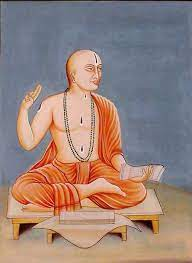
Shri Narendra Modi recently paid his obeisances to Sri Madhvacharya on the occasion of Madhva Navami.

 About Sri Madhvacharya:

Shri Madhvacharya was born near Udupi. He was born in 1238, on the auspicious day of Vijayadashami, and he was named Vasudeva.

  • He was the third of the trinity of philosophers who influenced Indian thoughts after the ages of the Vedas and Puranas (the other two being Shankaracharya and Ramanujacharya).
  • He propounded the philosophy of Dwaita or Dualism.
  • It was Achyutapreksha who gave him the title ‘Madhva’ by which he was more famously known.
  • Literary works: He wrote various texts that detailed his philosophy which he called Tattvavada, or as it is more popularly known, Dvaita. Some of his works were the Gita Bhashya, Brahma Sutra Bhashya, Anu Bhashya, Karma Nirnaya, and Vishnu Tattva Nirnaya.

 About Dvaita philosophy:

  • The basic tenet of Dvaita philosophy is the refutation of the Mayavada of Sri Shankara. Dvaitha emphasizes that the world is real and not just an illusion.
  • The soul is bound to this world through ignorance.
  • The way for the soul to release itself from this bondage is to seek the grace of Sri Hari.
  • To reach Sri Hari, one has to practice Bhakthi, there is no other way.
  • To practice Bhakthi, one needs to meditate.
  • To meditate, one needs to clear the mind and attain detachment by studying the sacred texts.

ISRO successfully launches EOS-04 radar imaging satellite, two others

 The Indian Space Research Organisation (ISRO) successfully launched earth observation satellite EOS-04 along with two other smaller passenger satellites aboard Polar Satellite Launch Vehicle at 5.59 am on February 14, 2022 from the first launch pad of Satish Dhawan Space Centre at Sriharikota in Andhra Pradesh.

ISRO tweeted after the launch saying, "India’s Polar Satellite Launch Vehicle PSLV-C52 injected Earth Observation Satellite EOS-04, into an intended sun-synchronous polar orbit of 529 km altitude at 06:17 hours IST on February 14, 2022 from Satish Dhawan Space Centre, SHAR, Sriharikota."

This was ISRO's first launch mission of 2022 and PSLV’s 54th flight. The launch comes almost six months after ISRO's GSLV-F10/EOS-03 mission failed on August 12, 2021. As per ISRO, the mission failed after the cryogenic upper stage ignition did not happen due to a technical anomaly.

PSLV-C52 mission 

The radar-imaging satellite, weighing 1710 kg, was deployed into a sun-synchronous polar orbit of 529 km around 17 minutes after liftoff.  Besides the earth observation satellite EOS-04, the mission also carried two small satellites as co-passengers, which were injected into the orbit a minute later.

The two passenger satellites include:

INSPIREsat-1: It is a student satellite from Indian Institute of Space Science & Technology (IIST) in association with University of Colorado's Laboratory of Atmospheric & Space Physics.

INS-2TD: This is a technology demonstrator satellite (INS-2TD) from ISRO, a precursor to India-Bhutan Joint Satellite (INS-2B).

EOS-04 Satellite

The EOS-04 satellite, also known as RISAT1, is a Radar Imaging Satellite. It has been designed to provide high-quality images under all weather conditions. The images will be used for applications such as agriculture, soil moisture and hydrology, forestry & plantations and flood mapping.

The countdown process of 25 hours and 30 minutes leading to the launch of the mission will begin at 04:29 hours on February 13th after getting a go-ahead from ISRO's Launch Authorization Board.

Tuesday, 8 February 2022

Karnataka hijab row: Freedom of religion and attire


Recently, six students were banned from entering a college in Karnataka’s Udupi district for wearing a hijab. The issue throws up legal questions on reading the freedom of religion and whether the right to wear a hijab is constitutionally protected or not.


How is religious freedom protected under Indian Constitution?

Article 25(1) of the Constitution of India guarantees the freedom of conscience and the right freely to profess, practise and propagate religion. It is a right that guarantees negative liberty — which means that the state shall ensure that there is no interference or obstacle to exercising this freedom.

Limitations: Like all fundamental rights, the state can restrict the right for grounds of public order, decency, morality, health and other state interests.

Observations made by the Supreme Court in this matter:

Shirur Mutt case in 1954: The doctrine of “essentiality” was invented by the Supreme Court. The court held that the term “religion” will cover all rituals and practices “integral” to a religion, and took upon itself the responsibility of determining the essential and non-essential practices of a religion.


What are the court’s rulings on Hijab?

In Amna Bint Basheer v Central Board of Secondary Education (2016), the Kerala High Court held that the practice of wearing a hijab constitutes an essential religious practise but did not quash the dress code prescribed by CBSE. It rather provided additional safeguards, such as examining students wearing full sleeves when needed.

In Fathima Tasneem v State of Kerala (2018), Kerala HC held that collective rights of an institution would be given primacy over the individual rights of the petitioner. The case involved two girls who wanted to wear the headscarf. The school refused to allow the headscarf. However, the court dismissed the appeal as students were no more in the rolls of the respondent-School.


Recent Step-By-Step Developments on Hijab Row

HIJAB ROW BEGINS ON NEW YEAR DAY 2022

Muslim girl students of the state-run PU College in Karnataka's Udupi alleged on Saturday, January 1, 2022, that they were denied entry into the classroom for wearing hijab.

Allegedly, principal Rudra Gowda did not permit them to wear hijab in the classrooms. Gowda said the rule was being followed to ensure uniformity in classrooms.

SAFFRON SHAWLS EMERGE

On January 3, a section of college students in Karnataka's Koppa district wore saffron scarves protesting allegedly against allowing Muslim women to wear hijab inside the classroom.

The students of the government-run college in Balagadi village claimed that if hijab was allowed inside, then saffron scarves could be sported too.

MEETINGS, PROTEST TAKE PLACE OVER HIJAB ROW

On Wednesday, January 19, a meeting was conducted between students, parents, government officials and the school management of the state-run PU College in Karnataka's Udupi, with the aim of solving the issue of the Hijab row.

However, according to those who participated in the meeting, no conclusion was reached.

The very next day, the five girls began protesting outside the school. They held placards as a sign of protest against the decision not to allow them to attend classes while wearing hijabs.

K’TAKA GOVT SETS UP EXPERT PANEL TO SOLVE HIJAB ROW

On January 26, the Karnataka government set up an expert committee to resolve the issue involving hijabs inside classrooms. It was announced that all girls should adhere to uniform rules until the committee's recommendations came.

WRIT PLEA ON HIJAB ROW IN HIGH COURT

On January 31, a writ petition was filed in the Karnataka High Court by a Muslim girl student from Udupi seeking a declaration that wearing a hijab is a fundamental right.

The plea stated that the Indian constitution guarantees the Freedom of Conscience and the right to profess, practise and propagate religion.

HIJAB ROW SPILLS OVER TO SHIVAMOGGA DISTRICT

Another hijab row broke out at Bhadravati in Karnataka’s Shivamogga district on Wednesday, February 2. Students of Sir MV Government college protested against certain students wearing hijabs in the classroom.

HINDU GROUPS ‘FORCE’ BOYS TO WEAR SAFFRON SHAWLS

On February 4, allegations emerged that Hindu groups were ‘forcing’ boys to wear saffron shawls in pre-university college classrooms in Udupi.

According to reports, this incident took place even after Muslim girls in the college removed their hijabs before entering the campus. The principal, however, intervened in the matter to stop Hindu outfits from enforcing a ‘saffron shawl campaign’.

On the same day, Dravida Munnetra Kazhagan (DMK) MP Senthil Kumar, representing Tamil Nadu’s Dharmapuri constituency, raised the Karnataka hijab row in Parliament.

He sought to know why students wearing hijab were not allowed to attend classes. He urged the central government to take action in the matter.

CM BOMMAI HOLDS MEETING OVER HIJAB ROW

Chief Minister Basavaraj Bommai on Saturday, February 5, held a meeting with Primary and Secondary Education Minister BC Nagesh and top government officials, regarding the government's stand on the ongoing hijab row.

On Tuesday, February 8, the Karnataka High Court will hear the petitions filed by five girls studying in a government Pre-university college in Udupi, questioning hijab restrictions in colleges.

TWO HELD FOR FLASHING KNIVES DURING HIJAB ROW IN UDUPI

At least two people were detained by police for flashing knives during the ongoing hijab-saffron shawl row in the Kundapur town of Udupi district in Karnataka on Friday, February 5.

GIRLS STAGE WALKOUT AFTER NOT BEING ALLOWED TO CLASSES WITH HIJAB

On Monday morning , February 7, three students wearing hijabs walked into Kalavara Varadaraj government College in Koteshwara town of Karnataka’s Udupi district.

Upon seeing this, other students began wearing saffron shawls as a sign of protest. The principal convinced them to not wear the saffron shawls and they entered. The principal asked the girls to remove their hijabs too.

Not willing to budge, the three girls with hijabs walked out of the college.

On the same day, in Mandya district, a large number of students in Mandya district of Karnataka turned up to college wearing saffron shawls and chanting ‘Jai Shri Ram’.