Showing posts with label NATIONAL NEWS. Show all posts

Thursday, 25 August 2022

Organic farming: A gamechanger for agriculture in India?

 Why In News These Days:

 “Organic farming is our duty,” Prime Minister Narendra Modi said, while addressing the nation on the 75th Independence Day on August 15.

Modi mentioned organic and natural farming twice in his speech, as he talked about turning to chemical-free agriculture.

“Today natural farming is also a way of becoming self-reliant,” he said. “Today the factories of nano fertilisers have brought new hope to the country. But natural farming and chemical-free farming can give a boost to self-reliance.”

While switching to organic farming could counter dangers to the environment—such as soil degradation due to increased fertiliser use—and public health, scientists are still divided on whether India can afford the transition to chemical-free agriculture. That’s because organic farming means less intensive agriculture, and in turn, decreased crop productivity. This could put India on the backfoot with regard to food security; altered rainfall patterns caused by climate change are already causing huge losses to farmers, scientists said.

Benefits of organic farming

Today, India has a surplus of foodgrains. This self-sufficiency came thanks to the Green Revolution in the 1960s, which increased crop production—of mostly rice and wheat—substantially. Foodgrain production rose from 82 million tonnes (MT) in the late 1960s to 264 MT in 2013-14.

But along with the increasing area under farming and switching to high-yielding varieties of rice and wheat, farmers were also encouraged to use chemicals—fertilisers and pesticides—to facilitate higher yields.

This caused “unintended but harmful consequences on agriculture and human health”, according to scientists Daisy John and Giridhar Babu of the Public Health Foundation of India, Bengaluru. The impacts were many and still persist, they wrote. The use of pesticides and fertilisers led to an increase in heavy metals (such as cadmium, lead and arsenic) in the soil. In many areas, soils turned more alkaline; beneficial microbes died, and soils became infertile. Farmers in some major Green Revolution belts including Punjab also burn crop residue, which is a major cause of air pollution in northern India.

A recent report by the non-profit Pesticide Action Network India found that there is widespread, unauthorised and unsafe use of four pesticides (chlorpyrifos, fipronil, atrazine, and paraquat dichloride) in India. Of these, three are listed as “moderately hazardous” by the World Health Organisation based on their health impacts.

What is Organic Farming?

The USDA defines organic agriculture as "a production system that is managed to respond to site-specific conditions by integrating cultural, biological, and mechanical practices that foster cycling of resources, promote ecological balance, and conserve biodiversity."

More specifically, organic farming entails:

  • Use of cover crops, green manures, animal manures and crop rotations to fertilize the soil, maximize biological activity and maintain long-term soil health.
  • Use of biological control, crop rotations and other techniques to manage weeds, insects and diseases.
  • An emphasis on biodiversity of the agricultural system and the surrounding environment.
  • Using rotational grazing and mixed forage pastures for livestock operations and alternative health care for animal wellbeing.
  • Reduction of external and off-farm inputs and elimination of synthetic pesticides and fertilizers and other materials, such as hormones and antibiotics.
  • A focus on renewable resources, soil and water conservation, and management practices that restore, maintain and enhance ecological balance.

When deciding if organic farming might be right for you, consider the list of characteristics shared by successful organic farmers:

  • A commitment to a safer food supply and protection of the environment
  • Patience and good observation skills
  • An understanding of ecological systems
  • Good marketing skills and motivation to spend time seeking out markets
  • A willingness to share stories of successes and failures and to learn from others (information networks are often underdeveloped for organic farmers).
  • Flexibility and eagerness to experiment with new techniques and practices

Types of Organic Farming

Organic farming is divided into two types, namely:

  1. Integrated organic farming
  2. Pure organic farming

Pure organic farming means avoiding all unnatural chemicals. In this process of farming, all the fertilisers and pesticides are obtained from natural sources such as bone meal or blood meal.

Integrated organic farming includes the integration of pest management and nutrients management to achieve ecological requirements and demands.


Benefits of organic farming

  •  Environment-friendly.
  • Promotes sustainable development.
  • Healthy and tasty food.
  • Inexpensive process.
  • It uses organic inputs.
  • Generates income.
  • Generates income through exports.
  • Source of employment.
  • Organic farming is more labour intensive. Hence, it generates more employment.

Disadvantages of Organic Farming

Incompetent: The major issue of organic farming is the lack of inadequate infrastructure and marketing of the product.

Less production: The products obtained through organic farming are less in the initial years as compared to that in chemical products. So, farmers find it difficult to accommodate large-scale production.

Shorter shelf life: Organic products have more flaws and a shorter shelf life than that of chemical products.

Limited production: Off-season crops are limited and have fewer options in organic farming.

India Post to provide services at doorstep, open 10k more post offices

 Department of Posts Secretary Aman Sharma at a CII conference said that the government has provided the department with Rs 5,200 crore for the modernisation of the post offices using technology.

"We have recently completed delivery through drones in Gujarat. The government has asked us to take forward the IT project that we started in 2012. The postal and various government services will be soon given on doorsteps. "Rather than people coming to post offices, with the help of technology, services will be delivered on their doorsteps," Sharma said.

He said that digital transformation is going to be the way forward and the government is very bullish on using technology to provide services to citizens. During the pandemic, India Post delivered more than Rs 20,000 crore to the doorstep of people using Aadhaar enabled payment systems.

"Government is asking us to enhance our reach further and open more post offices. We have just got permission to open 10,000 more post offices. These will be brick and mortar structures in far-flung areas. The government wants banking and financial services to be available to people within 5 kilometres of their dwelling. Therefore, we are setting up more post offices," Sharma said. The new 10,000 post offices will be opened during the current financial year, which will take the total number of post offices in India to around 1.7 lakh.

AAP members pay tribute to Mahatma Gandhi at Rajghat


Delhi CM Arvind Kejriwal told the media "We paid tributes and offered prayers to Mahatma Gandhi. We saw a few days back that there was a fake FIR registered against Manish Sisodia and CBI raided his residence for 12 hours. Even after that, they could not find any documents or unaccounted money."

Raj Ghat, Delhi: History

Mohandas Karamchand Gandhi, also known as Mahatma Gandhi, was assassinated on 30th January 1948 and the following day, his body was cremated at a spot near the Yamuna. Raj Ghat marks the exact location where Gandhiji was consigned to flames and his last rites were performed. A simple memorial was built at this place in keeping with Gandhiji’s philosophy and practice of living a modest life.

Originally, Raj Ghat Gate was the name of an old gate that existed in the walled city of Delhi called Shahjahanabad. It opened on the west bank of the River Yamuna at a place called Raj Ghat. Later, the area where the memorial for Gandhiji was built came to be referred to as Raj Ghat.

Over the years, the samadhis of many notable Indian leaders were constructed in the Raj Ghat area, including former Presidents and Prime Ministers of the country. Rashtriya Smriti Sthal, the samadhi of Atal Bihari Vajpayee constructed in 2018 is the latest addition to the Raj Ghat area.

Jharkhand CMO reacts to ECI report to Jharkhand Governor recommending CM's disqualification


The Jharkhand CMO said The Chief Minister is apprised of several media reports about ECI sending a report to Jharkhand Governor "apparently recommending his disqualification as an MLA". No communication in this regard has been received by CMO from either ECI or Governor

The Jharkhand CM said, "It seems BJP leaders incl a BJP MP & his puppet journalists themselves drafted ECI report, which is otherwise sealed.Blatant misuse of constitutional authorities & public agencies & its takeover by BJP HQ in shameful manner is unseen in Indian Democracy

WHAT IS ELECTION COMMISSION OF INDIA (ECI)?


The Election Commission of India (ECI) is an autonomous and permanent constitutional body responsible for organising free and fair elections in the Union and States of India. The Constitution grants the ECI with the power of direction, superintendence, and control of elections to Parliament, state legislatures, the office of president of India and the office of vice-president of India. The ECI does not deal with the elections to the urban bodies such as Municipalities and Panchayats in the states and hence, a separate State Election Commission.


Powers and responsibilities

The Commission’s functions and powers with respect to elections are divided into three categories (Administrative, Advisory, and Quasi-judicial). In detail, these powers include

1) Determining the Electoral Constituencies’ territorial areas throughout the country.
2) Preparing and periodically revising electoral rolls and registering all eligible voters.
3) Notifying the schedules and dates of elections and scrutinising nomination papers.
4) Granting recognition to the various political parties and allocating them election symbols.
5) The Commission also has advisory jurisdiction in the matter of post-election disqualification of sitting members of Parliament and State Legislatures.
6) It issues the Model Code of Conduct in elections for political parties and candidates so that no one indulges in unfair practice or there is no arbitrary abuse of powers by those in power.

Composition of Election Commission

Since its inception in 1950, the election commission had been a one-member body with only the Chief Election Commissioner (CEC) as its sole member. Later, two more election commissioners were appointed to the body and the Election Commission became a multi-member body with 3 election commissioners. The President appoints the Chief Election Commissioner and other election commissioners. The tenure of office and the conditions of service of all the commissioners is determined by the President. The chief and the two other election commissioners have the same powers and emoluments including salaries, which are the same as a Supreme Court judge. In case of a difference of opinion amongst the three members, the matter is decided by the Commission by a majority.

Article 324

Article 324 of The Constitution of India mentions the provisions to safeguard and ensure the independent and impartial functioning of the Election Commission.
The chief election commissioner is provided with security of tenure. He cannot be removed from his office except in the same manner and on the same grounds as a judge of the Supreme Court. In other words, he can be removed by the President on the basis of a resolution passed to that effect by both the Houses of Parliament with a special majority, either on the ground of proved misbehaviour or incapacity. Any other election commissioner or a regional commissioner cannot be removed from office except on the recommendation of the chief election commissioner.

Assam is implementing counter-radicalisation measures.

Assam DGP has informed that we have engaged with different Muslim groups in this regard, & they've cooperated. Many madrasas are sprouting in Assam & that is why some people are taking advantage of it, said Assam DGP.

The whole conspiracy is being hatched outside of Assam. Primarily from Bangladesh, some Al-Qaeda affiliates are influencing people here and spreading radicalisation. We are arrested more than 34 people till now. We will not allow such conspiracies to succeed, he added. 


About Counter-Radicalisation

Terrorism poses a direct threat to the security of the citizens of  countries, and to international stability and prosperity. It is a persistent global threat that knows no border, nationality or religion, and is a challenge that the international community must tackle together. We have to fight this threat with determination and in full solidarity. India's work on counter-terrorism focuses on improving awareness of the threat, developing capabilities to prepare and respond, and enhancing engagement with partner countries and other international actors.

PM Shri Narendra Modi to visit Gujarat on 27th & 28th August


During his visit, PM will address Khadi Utsav at Sabarmati Riverfront in Ahmedabad on 27th Aug & inaugurate Smriti Van Memorial in Bhuj on 28th Aug. He'll also lay foundation stone & inaugurate developmental projects in Bhuj, notified PMO.

Furthermore, on August 28th, Prime Minister Narendra Modi will address a programme in Gandhinagar, marking the commemoration of 40 years of Suzuki in India.

Monday, 14 February 2022

Supreme court refuses plea for including madrasas, Vedic schools under RTE

The Supreme Court has refused to intervene in a petition challenging sections of the Right to Education Act of 2009 which exclude vedic pathsalas , madrasas and institutions imparting religious education from its ambit.

  • The Court observed that the exclusion of these institutions was specifically inserted into the 2009 Act by an amendment of August 2012 and since then there has never been any controversy in the past decade.

What’s the issue?

The petitioner said, Right of a child should not be restricted only to free education, but must be extended to have equal quality education without discrimination on the ground of child’s social economic and cultural background. Therefore, the court may declare Sections 1(4) and 1(5) of the 2009 Act arbitrary and irrational.

Sections 1(4) and 1(5) of the 2009 Act:

Section 1(5) of the Act states, “Nothing contained in this Act shall apply to madrasas, Vedic pathshalas and educational institutions primarily imparting religious instruction”.

Section 1(4) says, “Subject to the provisions of Articles 29 and 30 of the Constitution, the provisions of this Act shall apply to conferment of rights on children to free and compulsory education.

  • Article 29 and 30 contain provisions securing rights of minorities and minority-run institutions.

Constitutional Provisions regarding Minority Educational Institutions:

Article 30(1) recognizes linguistic and religious minorities but not those based on race, ethnicity.

  • It recognizes the right of religious and linguistic minorities to establish and administer educational institutions, in effect recognizing the role educational institutions play in preserving distinct culture.
  • A majority community can also establish and administer educational institutions but they will not enjoy special rights under Article 30(1)(a).


Special rights enjoyed by religious minority institutions are:

  1. Under Art 30(1)(a), MEI enjoy right to education as a Fundamental Right. In case the property is taken over by state, due compensation to be provided to establish institutions elsewhere
  2. Under Article 15(5), MEIs are not considered for reservation
  3. Under Right to Education Act, MEI not required to provide admission to children in the age group of 6-14 years upto 25% of enrolment reserved for economically backward section of society
  4. In St Stephens vs Delhi University case, 1992, SC ruled that MEIs can have 50% seats reserved for minorities
  5. In TMA Pai & others vs State of Karnataka & others 2002 case, SC ruled that MEIs can have separate admission process which is fair, transparent and merit based. They can also separate fee structure but should not charge capitation fee.


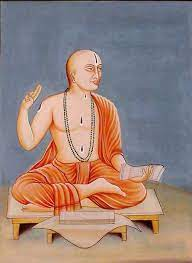
Shri Narendra Modi recently paid his obeisances to Sri Madhvacharya on the occasion of Madhva Navami.

 About Sri Madhvacharya:

Shri Madhvacharya was born near Udupi. He was born in 1238, on the auspicious day of Vijayadashami, and he was named Vasudeva.

  • He was the third of the trinity of philosophers who influenced Indian thoughts after the ages of the Vedas and Puranas (the other two being Shankaracharya and Ramanujacharya).
  • He propounded the philosophy of Dwaita or Dualism.
  • It was Achyutapreksha who gave him the title ‘Madhva’ by which he was more famously known.
  • Literary works: He wrote various texts that detailed his philosophy which he called Tattvavada, or as it is more popularly known, Dvaita. Some of his works were the Gita Bhashya, Brahma Sutra Bhashya, Anu Bhashya, Karma Nirnaya, and Vishnu Tattva Nirnaya.

 About Dvaita philosophy:

  • The basic tenet of Dvaita philosophy is the refutation of the Mayavada of Sri Shankara. Dvaitha emphasizes that the world is real and not just an illusion.
  • The soul is bound to this world through ignorance.
  • The way for the soul to release itself from this bondage is to seek the grace of Sri Hari.
  • To reach Sri Hari, one has to practice Bhakthi, there is no other way.
  • To practice Bhakthi, one needs to meditate.
  • To meditate, one needs to clear the mind and attain detachment by studying the sacred texts.

ISRO successfully launches EOS-04 radar imaging satellite, two others

 The Indian Space Research Organisation (ISRO) successfully launched earth observation satellite EOS-04 along with two other smaller passenger satellites aboard Polar Satellite Launch Vehicle at 5.59 am on February 14, 2022 from the first launch pad of Satish Dhawan Space Centre at Sriharikota in Andhra Pradesh.

ISRO tweeted after the launch saying, "India’s Polar Satellite Launch Vehicle PSLV-C52 injected Earth Observation Satellite EOS-04, into an intended sun-synchronous polar orbit of 529 km altitude at 06:17 hours IST on February 14, 2022 from Satish Dhawan Space Centre, SHAR, Sriharikota."

This was ISRO's first launch mission of 2022 and PSLV’s 54th flight. The launch comes almost six months after ISRO's GSLV-F10/EOS-03 mission failed on August 12, 2021. As per ISRO, the mission failed after the cryogenic upper stage ignition did not happen due to a technical anomaly.

PSLV-C52 mission 

The radar-imaging satellite, weighing 1710 kg, was deployed into a sun-synchronous polar orbit of 529 km around 17 minutes after liftoff.  Besides the earth observation satellite EOS-04, the mission also carried two small satellites as co-passengers, which were injected into the orbit a minute later.

The two passenger satellites include:

INSPIREsat-1: It is a student satellite from Indian Institute of Space Science & Technology (IIST) in association with University of Colorado's Laboratory of Atmospheric & Space Physics.

INS-2TD: This is a technology demonstrator satellite (INS-2TD) from ISRO, a precursor to India-Bhutan Joint Satellite (INS-2B).

EOS-04 Satellite

The EOS-04 satellite, also known as RISAT1, is a Radar Imaging Satellite. It has been designed to provide high-quality images under all weather conditions. The images will be used for applications such as agriculture, soil moisture and hydrology, forestry & plantations and flood mapping.

The countdown process of 25 hours and 30 minutes leading to the launch of the mission will begin at 04:29 hours on February 13th after getting a go-ahead from ISRO's Launch Authorization Board.

Tuesday, 8 February 2022

Karnataka hijab row: Freedom of religion and attire


Recently, six students were banned from entering a college in Karnataka’s Udupi district for wearing a hijab. The issue throws up legal questions on reading the freedom of religion and whether the right to wear a hijab is constitutionally protected or not.


How is religious freedom protected under Indian Constitution?

Article 25(1) of the Constitution of India guarantees the freedom of conscience and the right freely to profess, practise and propagate religion. It is a right that guarantees negative liberty — which means that the state shall ensure that there is no interference or obstacle to exercising this freedom.

Limitations: Like all fundamental rights, the state can restrict the right for grounds of public order, decency, morality, health and other state interests.

Observations made by the Supreme Court in this matter:

Shirur Mutt case in 1954: The doctrine of “essentiality” was invented by the Supreme Court. The court held that the term “religion” will cover all rituals and practices “integral” to a religion, and took upon itself the responsibility of determining the essential and non-essential practices of a religion.


What are the court’s rulings on Hijab?

In Amna Bint Basheer v Central Board of Secondary Education (2016), the Kerala High Court held that the practice of wearing a hijab constitutes an essential religious practise but did not quash the dress code prescribed by CBSE. It rather provided additional safeguards, such as examining students wearing full sleeves when needed.

In Fathima Tasneem v State of Kerala (2018), Kerala HC held that collective rights of an institution would be given primacy over the individual rights of the petitioner. The case involved two girls who wanted to wear the headscarf. The school refused to allow the headscarf. However, the court dismissed the appeal as students were no more in the rolls of the respondent-School.


Recent Step-By-Step Developments on Hijab Row

HIJAB ROW BEGINS ON NEW YEAR DAY 2022

Muslim girl students of the state-run PU College in Karnataka's Udupi alleged on Saturday, January 1, 2022, that they were denied entry into the classroom for wearing hijab.

Allegedly, principal Rudra Gowda did not permit them to wear hijab in the classrooms. Gowda said the rule was being followed to ensure uniformity in classrooms.

SAFFRON SHAWLS EMERGE

On January 3, a section of college students in Karnataka's Koppa district wore saffron scarves protesting allegedly against allowing Muslim women to wear hijab inside the classroom.

The students of the government-run college in Balagadi village claimed that if hijab was allowed inside, then saffron scarves could be sported too.

MEETINGS, PROTEST TAKE PLACE OVER HIJAB ROW

On Wednesday, January 19, a meeting was conducted between students, parents, government officials and the school management of the state-run PU College in Karnataka's Udupi, with the aim of solving the issue of the Hijab row.

However, according to those who participated in the meeting, no conclusion was reached.

The very next day, the five girls began protesting outside the school. They held placards as a sign of protest against the decision not to allow them to attend classes while wearing hijabs.

K’TAKA GOVT SETS UP EXPERT PANEL TO SOLVE HIJAB ROW

On January 26, the Karnataka government set up an expert committee to resolve the issue involving hijabs inside classrooms. It was announced that all girls should adhere to uniform rules until the committee's recommendations came.

WRIT PLEA ON HIJAB ROW IN HIGH COURT

On January 31, a writ petition was filed in the Karnataka High Court by a Muslim girl student from Udupi seeking a declaration that wearing a hijab is a fundamental right.

The plea stated that the Indian constitution guarantees the Freedom of Conscience and the right to profess, practise and propagate religion.

HIJAB ROW SPILLS OVER TO SHIVAMOGGA DISTRICT

Another hijab row broke out at Bhadravati in Karnataka’s Shivamogga district on Wednesday, February 2. Students of Sir MV Government college protested against certain students wearing hijabs in the classroom.

HINDU GROUPS ‘FORCE’ BOYS TO WEAR SAFFRON SHAWLS

On February 4, allegations emerged that Hindu groups were ‘forcing’ boys to wear saffron shawls in pre-university college classrooms in Udupi.

According to reports, this incident took place even after Muslim girls in the college removed their hijabs before entering the campus. The principal, however, intervened in the matter to stop Hindu outfits from enforcing a ‘saffron shawl campaign’.

On the same day, Dravida Munnetra Kazhagan (DMK) MP Senthil Kumar, representing Tamil Nadu’s Dharmapuri constituency, raised the Karnataka hijab row in Parliament.

He sought to know why students wearing hijab were not allowed to attend classes. He urged the central government to take action in the matter.

CM BOMMAI HOLDS MEETING OVER HIJAB ROW

Chief Minister Basavaraj Bommai on Saturday, February 5, held a meeting with Primary and Secondary Education Minister BC Nagesh and top government officials, regarding the government's stand on the ongoing hijab row.

On Tuesday, February 8, the Karnataka High Court will hear the petitions filed by five girls studying in a government Pre-university college in Udupi, questioning hijab restrictions in colleges.

TWO HELD FOR FLASHING KNIVES DURING HIJAB ROW IN UDUPI

At least two people were detained by police for flashing knives during the ongoing hijab-saffron shawl row in the Kundapur town of Udupi district in Karnataka on Friday, February 5.

GIRLS STAGE WALKOUT AFTER NOT BEING ALLOWED TO CLASSES WITH HIJAB

On Monday morning , February 7, three students wearing hijabs walked into Kalavara Varadaraj government College in Koteshwara town of Karnataka’s Udupi district.

Upon seeing this, other students began wearing saffron shawls as a sign of protest. The principal convinced them to not wear the saffron shawls and they entered. The principal asked the girls to remove their hijabs too.

Not willing to budge, the three girls with hijabs walked out of the college.

On the same day, in Mandya district, a large number of students in Mandya district of Karnataka turned up to college wearing saffron shawls and chanting ‘Jai Shri Ram’.

Lata Mangeshkar's Brother Was Fired In 8 Days

 Prime Minister Narendra Modi on Tuesday renewed his attack on the Congress, citing the sacking of Hridaynath Mangeshkar, the brother of iconic late singer Lata Mangeshkar, from All India Radio to accuse the party of stifling freedom of expression - a charge frequently levelled against his government

"Today India is sad because of the demise of Lata Mangeshkarji... but let me tell you that during Congress' rule in Goa, her younger brother, Hridaynath Mangeshkar, was removed from All India Radio in eight days as he recited some verses from Veer Savarkar's poem," the Prime Minister said.

Calling him a "proud son of Goa", which votes in an Assembly election next week, the Prime Minister said: "What was his fault? He had only presented a patriotic poem by Veer Savarkar on AIR once."

The Congress's problem is that it has never thought beyond its dynasty. The biggest threats to democracy are dynastic parties... and when the family becomes paramount, first casualty is talent."

Picking up from where he left off yesterday in the Lok Sabha, the Prime Minister told the Rajya Sabha "talent is the first casualty of dynastic politics" and rattled of a list of how the country would be different "if Congress had not there".

"People wonder what if there had been no Congress. They are stuck in India is Indira, Indira is India," he said, referring to a Congress phrase for one of its iconic leaders, former PM Indira Gandhi.

"They believe in discredit, destabilise, dismiss... big speeches are given on federalism but have we forgotten the times when chief ministers were removed for small reasons? Our thoughts aren't like that of the Congress," the Prime Minister said.

ICC U-19 World Cup 2022


Key Facts

2022 ICC Under-19 Cricket World Cup

It was an international limited-overs cricket tournament, held in January-February 2022 in West Indies. 16 teams took part in the game. It was the fourteenth edition of Under-19 Cricket World Cup. It was the first tournament, held in West Indies. Bangladesh were the defending champions.

Background

Cricket West Indies confirmed in March 2021 that the format would be same as previous editions, where team competing to progress to the Plate and Super League phases of this tournament. The ICC confirmed full schedule for this tournament in November 2021.

Venue for matches

Matches were played in Antigua, Saint Kitts, Guyana, and Trinidad. Final match was played at Sir Vivian Richards Stadium in Antigua.

Why New Zealand withdrew?

New Zealand withdrew from the tournament because of extensive mandatory quarantine restrictions for minors on their return home. Scotland was named as their replacement.

First team to the final

England was the first team to reach final of the tournament, after beating Afghanistan by 15 runs in first Super League semi-final match. England reached to final for the first time, since winning 1998 tournament in South Africa. In the second semi-final, India won against Australia by 96 runs.