Showing posts with label LATEST. Show all posts

Thursday, 17 February 2022

India is all set to Lunch It's Green Energy Policy? Why in New? Know All about it.

 The government is to announce the first part of the National Green Hydrogen policy on February 17, power minister Raj Kumar Singh has said, a move aimed at making India energy-independent and also meeting its climate commitments.

The government would allow free power transmission to renewable energy units set up by green-hydrogen producers and power banking facility for 30 days, Singh has said.

The second phase, which would require the approval of the Union Cabinet, would follow soon.

Prime Minister Narendra Modi announced the National Hydrogen Mission on Independence Day in 2021, with the ambition to boost the growth of green hydrogen in India to work towards being energy independent.

Green hydrogen refers to the hydrogen generated from electrolysis of water, with the entire process run on renewable energy. Green hydrogen has the potential to be the enabler of transition to sustainable energy.

In the industry, the colour is assigned based on the source of electricity that is used to generate the hydrogen molecule. Brown hydrogen is for coal, grey for natural gas and blue if it is produced from natural gas with a process of steam methane reforming.

As climate change and global warming concerns mount and countries across the world commit to reducing emissions, green hydrogen has triggered a lot of interest given its ability to generate large-scale energy with a low carbon footprint.

With recent advances in technology, drop in prices, growing competition and government incentives, experts believe the green energy sector will take off over the next few years.

Several private sector companies have already made commitments towards working on green hydrogen production. Here’s a look at who is planning what:

Reliance Industries Ltd (RIL)

RIL chairman Mukesh Ambani has announced a plan to invest Rs 75,000 crore over the next three years to build a new clean-energy business aimed at meeting the conglomerate’s commitment to be net carbon neutral by 2035.

The plan entails three parts—a Rs 60,000-crore investment in four giga factories that will manufacture and fully integrate all the critical components for the business; a Rs 15,000-crore investment in building the value chain, partnerships and future technologies, including upstream and downstream industries and repurposing the company’s engineering, project management and construction capabilities toward clean energy.

Green hydrogen would be a priority, as Ambani said the group aims to offer hydrogen energy at under $1 a kg in a decade.

In October 2021, RIL arm Reliance New Energy Solar Limited (RNESL) signed a memorandum of understanding with Danish company Stiesdal A/S to partner and cooperate on the completion, development, and subsequent manufacturing of hydrogen electrolysers being developed by the latter in India.

RIL also aims to be one of the largest producers of blue hydrogen globally by using petroleum coke.

GAIL (India) Ltd

The state-run company is geared up to build India’s largest green-hydrogen facility over the next 12-14 months.

It aims to supplement its natural gas business with carbon-free fuel, as investors increase focus on environmental, social, and governance (ESG) parameters.

Last year, GAIL chairman and managing director Manoj Jain said the company launched a global tender to procure electrolyser that could produce 4.5 ton a day of hydrogen.

The company recently started a first-of-its-kind project of mixing hydrogen in the natural gas system at Indore, on pilot basis.

Indian Oil Corporation Ltd (IOC)

The company plans to build the country’s first green- hydrogen plant at its Mathura refinery.

The oil-marketing company has also has in-principle approval for an investment of Rs 100 crore for setting up green-hydrogen fuel infrastructure at Kochi and Thiruvanantuapuram as a pilot.

NTPC Ltd

The state-run power utility bagged the country’s first green hydrogen microgrid project at its Simhadri plant in Andhra Pradesh.

In July 2021, its arm NTPC Renewable Energy Ltd called a domestic tender to set up India’s first green hydrogen fuelling station in Leh, Ladakh.

The company plans to use the electricity generated from its upcoming renewable energy projects to generate green hydrogen on commercial scale.

Larsen & Toubro Ltd

The engineering major is keen to enter the green- hydrogen space and has already tied up with companies working on the technology.

L&T signed a pact with Norway-based electrolyser technology and manufacturer HydrogenPro AS to set up a unit in India.

As per the memorandum of understanding, L&T and HydrogenPro will work towards setting up of a gigawatt-scale manufacturing unit for alkaline water electrolysers  based on HydrogenPro technology.

In December, L&T tied up with Nasdaq-listed ReNew Power to jointly develop, own, execute and operate green hydrogen projects in India.

Adani Group

Billionaire Gautam Adani has said that the Adani Group hopes to become one of the largest green-hydrogen producers in the world, which could subsequently help India emerge as world’s cheapest hydrogen producer.

The group is investing $20 billion in renewable energy generation over the next decade and is keen to use for producing green hydrogen.

Bharat Petroleum Corporation Ltd (BPCL) 

The company has collaborated with Bhabha Atomic Research Centre (BARC) to work on alkaline electrolyser technology for Green Hydrogen production.

The company aims to scale up production of the electrolyser for commercial use, especially in refineries.

Many other companies, such as ReNew Power, ACME Group and JSW Group, are working towards entering the green-hydrogen ecosystem.

Wednesday, 16 February 2022

Anti-mob lynching bills: why in news? recent incidents of mob lynching

 Bills passed against mob lynching in the past four years by at least four States have not been implemented with the Union government taking a view that lynching is not defined as a crime under the Indian Penal Code (IPC).

  • These states include Jharkhand, Rajasthan, West Bengal and Manipur.

Why have the bills been delayed so much?

In 2019, the MHA informed the Lok Sabha that it had received the bills passed by the State legislatures that have been reserved by the Governor for consideration of the President.

  • The President has to go with the advice given by the Council of Ministers, in the case of such legislation, represented by the MHA.
  • The Ministry examines the State legislations on three grounds— repugnancy with Central laws, deviation from national or central policy and legal and constitutional validity. 

Recent incidents of mob lynching in India

  • In December 2021, a man was lynched to death by the Sikh Sangat (Sikh devotees) in Shri Harmandir Sahib Gurudwara (Golden Temple) in Amritsar over an alleged attempt to disrespect the holiest book of Sikh religion, Shri Guru Granth Sahib Ji.
  • In 2021 in Assam, a 23-year-old student leader was allegedly killed by a mob.
  • In 2021 October a man was allegedly lynched, his limbs cut off and left to die at the Singhu Border, site of the farmers’ protest against the three farm laws.
  • In 2021 August, a bangle seller in Indore was reportedly beaten up by a mob for allegedly hiding his identity.
  • The man survived and was sent to judicial custody.
  • In 2021 May, a 25-year-old Gurugram man was allegedly lynched when he went out to buy medicines. 

What is meant by Lynching? Why in news ?

Any act or series of acts of violence or aiding, abetting (encouraging) such act/acts thereof, whether spontaneous or planned, by a mob on the grounds of religion, race, caste, sex, place of birth, language, dietary practices, sexual orientation, political affiliation, ethnicity or any other related grounds. 

How are these cases handled?

There is “no separate” definition for such incidents under the existing IPC. Lynching incidents can be dealt with under Section 300 and 302 of IPC.

  • Section 302 provides that whoever commits murder shall be punished with death or imprisonment for life and shall also be liable to fine. Offence of murder is a cognisable, non- bailable and non-compoundable offence.

SC guidelines about mob lynching

  • There should be a “separate offence” for lynching and the trial courts must ordinarily award maximum sentence upon conviction of the accused person to set a stern example in cases of mob violence.
  • The state governments will have to designate a senior police officer in each district for taking measures to prevent incidents of mob violence and lynching.
  • The state governments need to identify districts, sub-divisions and villageswhere instances of lynching and mob violence have been reported in the recent past.
  • The nodal officers shall bring to the notice of the DGP about any inter-district co-ordination issues for devising a strategy to tackle lynching and mob violence related issues.
  • Every police officer shall ensure to disperse the mob that has a tendency to cause violence in the disguise of vigilantism or otherwise.
  • Central and the state governments shall broadcast on radio, television and other media platforms about the serious consequences of mob lynching and mob violence.
  • Despite the measures taken by the State Police, if it comes to the notice of the local police that an incident of lynching or mob violence has taken place, the jurisdictional police station shall immediately lodge an FIR.
  • The State Governments shall prepare a lynching/mob violence victim compensation scheme in the light of the provisions of Section 357A of CrPC.
  • If a police officer or an officer of the district administration fails to fulfill his duty, it will be considered an act of deliberate negligence.

Monday, 14 February 2022

Shri Narendra Modi recently paid his obeisances to Sri Madhvacharya on the occasion of Madhva Navami.
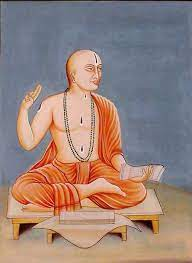
 About Sri Madhvacharya:

Shri Madhvacharya was born near Udupi. He was born in 1238, on the auspicious day of Vijayadashami, and he was named Vasudeva.

  • He was the third of the trinity of philosophers who influenced Indian thoughts after the ages of the Vedas and Puranas (the other two being Shankaracharya and Ramanujacharya).
  • He propounded the philosophy of Dwaita or Dualism.
  • It was Achyutapreksha who gave him the title ‘Madhva’ by which he was more famously known.
  • Literary works: He wrote various texts that detailed his philosophy which he called Tattvavada, or as it is more popularly known, Dvaita. Some of his works were the Gita Bhashya, Brahma Sutra Bhashya, Anu Bhashya, Karma Nirnaya, and Vishnu Tattva Nirnaya.

 About Dvaita philosophy:

  • The basic tenet of Dvaita philosophy is the refutation of the Mayavada of Sri Shankara. Dvaitha emphasizes that the world is real and not just an illusion.
  • The soul is bound to this world through ignorance.
  • The way for the soul to release itself from this bondage is to seek the grace of Sri Hari.
  • To reach Sri Hari, one has to practice Bhakthi, there is no other way.
  • To practice Bhakthi, one needs to meditate.
  • To meditate, one needs to clear the mind and attain detachment by studying the sacred texts.

ISRO successfully launches EOS-04 radar imaging satellite, two others

 The Indian Space Research Organisation (ISRO) successfully launched earth observation satellite EOS-04 along with two other smaller passenger satellites aboard Polar Satellite Launch Vehicle at 5.59 am on February 14, 2022 from the first launch pad of Satish Dhawan Space Centre at Sriharikota in Andhra Pradesh.

ISRO tweeted after the launch saying, "India’s Polar Satellite Launch Vehicle PSLV-C52 injected Earth Observation Satellite EOS-04, into an intended sun-synchronous polar orbit of 529 km altitude at 06:17 hours IST on February 14, 2022 from Satish Dhawan Space Centre, SHAR, Sriharikota."

This was ISRO's first launch mission of 2022 and PSLV’s 54th flight. The launch comes almost six months after ISRO's GSLV-F10/EOS-03 mission failed on August 12, 2021. As per ISRO, the mission failed after the cryogenic upper stage ignition did not happen due to a technical anomaly.

PSLV-C52 mission 

The radar-imaging satellite, weighing 1710 kg, was deployed into a sun-synchronous polar orbit of 529 km around 17 minutes after liftoff.  Besides the earth observation satellite EOS-04, the mission also carried two small satellites as co-passengers, which were injected into the orbit a minute later.

The two passenger satellites include:

INSPIREsat-1: It is a student satellite from Indian Institute of Space Science & Technology (IIST) in association with University of Colorado's Laboratory of Atmospheric & Space Physics.

INS-2TD: This is a technology demonstrator satellite (INS-2TD) from ISRO, a precursor to India-Bhutan Joint Satellite (INS-2B).

EOS-04 Satellite

The EOS-04 satellite, also known as RISAT1, is a Radar Imaging Satellite. It has been designed to provide high-quality images under all weather conditions. The images will be used for applications such as agriculture, soil moisture and hydrology, forestry & plantations and flood mapping.

The countdown process of 25 hours and 30 minutes leading to the launch of the mission will begin at 04:29 hours on February 13th after getting a go-ahead from ISRO's Launch Authorization Board.

Monday, 7 February 2022

Delimitation Panel

Overview:

The Jammu and Kashmir Delimitation Commission (headed by retired Supreme Court Judge Justice Ranjana Prakash Desai) has submitted its interim report. As per the report:


Delimitation exercise in J&K- a timeline:

  1. The first delimitation exercise, carving out 25 assembly constituencies in the then state, was carried out by a Delimitation Committee in 1951.
  2. The first full-fledged Delimitation Commission was formed in 1981 and it submitted its recommendations in 1995 on the basis of 1981 Census. Since then, there has been no delimitation.
  3. In 2020, the Delimitation Commission was constituted to carry out the exercise on the basis of 2011 Census, with a mandate to add seven more seats to the Union Territory’ and grant reservations to SC and ST communities.
  4. Now, the total number of seats in Jammu and Kashmir will be raised to 90 from the previous 83. This is apart from 24 seats which have been reserved for areas of PoK and have to be kept vacant in the Assembly.


What is delimitation and why is it needed?

The Delimitation Commission for Jammu and Kashmir was constituted by the Centre on March 6 last year to redraw Lok Sabha and assembly constituencies of the union territory in accordance with the provisions of the Jammu and Kashmir Reorganisation Act, 2019 and Delimitation Act, 2002, passed by the Centre in August 2019 along with other J&K-specific Bills.


What is Delimitation?

Delimitation literally means the process of fixing limits or boundaries of territorial constituencies in a state that has a legislative body.


Who carries out the exercise?

  • Delimitation is undertaken by a highly powerful commission. They are formally known as Delimitation Commission or Boundary Commission.
  • These bodies are so powerful that its orders have the force of law and they cannot be challenged before any court.


Composition of the Commission:

According to the Delimitation Commission Act, 2002, the Delimitation Commission will have three members: a serving or retired judge of the Supreme Court as the chairperson, and the Chief Election Commissioner or Election Commissioner nominated by the CEC and the State Election Commissioner as ex-officio members.


Constitutional Provisions:

  1. Under Article 82, the Parliament enacts a Delimitation Act after every Census.
  2. Under Article 170, States also get divided into territorial constituencies as per Delimitation Act after every Census.
  3. भारत के प्रमुख दर्रे।
  4. ICTP Ramanujan Prize: List of winners, eligibility, prize amount
  5. Vinay Kumar Tripathi becomes new Chairman, CEO of Railway Board
  6. A colony of frogs.
  7. Sri Lanka gives $1 billion relief as anger grows over food costs
  8. Delhi to soon get its first 100 percent electric buses
  9. Census and the National Population Register (NPR)
  10. Tamil Nadu govt permits Jallikattu with strict precautions in place
  11. Why has Earth's Northern Hemisphere witnessed year's shortest day today?
  12. Delhi Subordinate Service Selection Board (DSSSB) Assistant Law Officer/ Legal Assistant Recruitment 2022

SC to weigh between ‘national security’, judicial scrutiny

  Overview:

The Supreme Court is all set to examine whether the Centre can expect a free pass on matters pertaining to national security.

What’s the issue?

The question whether the state can use ‘national security’ as a ground to limit judicial scrutiny has come up for scrutiny in the MediaOne TV channel case.

The government has cited national security reasons in the Kerala High Court for canceling telecast permission to the Malayalam news channel.

  • Recently, in its Pegasus snooping case order, the Supreme Court observed that the Centre cannot expect a ‘free pass’ from the courts as soon as it raises the ‘spectre of national security’.

Observations made by the supreme court on this matter:

Scope of judicial review is limited in matters involving national security. However, this does not mean that the state gets a free pass every time the spectre of ‘national security’ is raised.

What harm can this cause?

One of the major concerns raised by citizens recently is the “chilling effect” such state actions endure to have on free speech, especially in the media.

What has the Supreme Court said in the Anuradha Basin case?

Anuradha Bhasin case concerned Internet restrictions in Jammu and Kashmir in the backdrop of the abrogation of Article 370.

  • The court had ruled that any order of the state which restricts the fundamental rights of speech or expression should be backed by reasons.
  • The courts should be convinced that the state acted in a responsible manner and did not take away rights in an “implied fashion or a casual or cavalier man.

Other related cases:

In Government of India v. Cricket Association of Bengal and Shreya Singhal v. The Union of India cases, the court has observed that there is no dispute that freedom of speech and expression includes the right to disseminate information to as wide a section of the population as is possible. The wider range of circulation of information or its greater impact cannot restrict the content of the right nor can it justify its denial.

What is Judicial Review?

Judicial review is the power of Judiciary to review any act or order of Legislative and Executive wings and to pronounce upon the constitutional validity when challenged by the affected person.

Judicial review present in India:

  1. The power of Judicial Review comes from the Constitution of India itself (Articles 13, 32, 136, 142 and 147 of the Constitution).
  2. The power of judicial review is evoked to protect and enforce the fundamental rights guaranteed in Part III of the Constitution.
  3. Article 13 of the Constitution prohibits the Parliament and the state legislatures from making laws that “may take away or abridge the fundamental rights” guaranteed to the citizens of the country.
  4. The provisions of Article 13 ensure the protection of the fundamental rights and consider any law “inconsistent with or in derogation of the fundamental rights” as void.


Thursday, 16 January 2020

Current Affairs MCQ for UPSC Exams - 16 January 2020

Q1. Which of the following statements regarding the recently released report by WMO ( World Meteorological Organisation ) on climate change and ocean heat stands true ?

1) One the current path of carbon dioxide emissions, we are heading towards a temperature increase of 3-5degree Celsius by the end of the century.
2) The past five years, and the past decade were the warmest on record in terms of ocean heat content.
3) More than 90% of the excess heat is stored in world’s oceans, their heat content is a good way to quantify the rate of global warming.

a) 1 & 2 only
b) 2 & 3 only
c) 1 & 3 only
d) all of the above

Thursday, 16 May 2019

Must Read News Articles – May 15th, 2019

GS-2
Indian External Affairs Minister told her Iranian counterpart that India will take a call on the purchase of Iranian energy after the general elections
India is trying to rally the support of other developing countries in the World Trade Organisation to reform the “biased” system of assessing a country’s services trade policies